ABOUT THE JOURNAL
The Journal of Children's Literature is a refereed journal devoted to teaching and scholarship for the field of children's literature. It is the product of the Children's Literature Assembly of NCTE and is published twice annually.
To join CLA and subscribe to the Journal of Children's Literature, visit our Membership Page or click on the membership links below. |
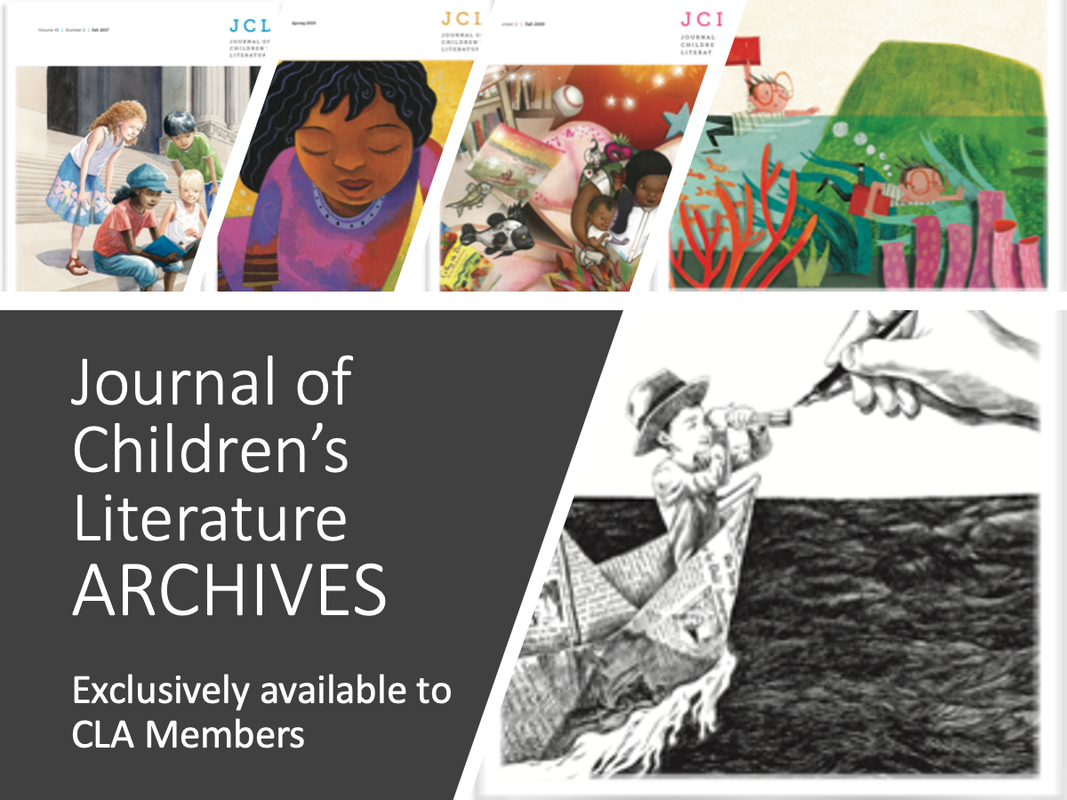
Journal MissionThe Journal of Children’s Literature, a refereed publication of the Children’s Literature Assembly of the National Council of Teachers of English, explores issues of current concern to scholars in the field of children’s literature, librarians, and classroom teachers—preschool through middle school. As a peer-reviewed professional publication, the Journal of Children’s Literature features research-based and scholarly articles that explore contemporary issues that are of interest to elementary and middle grade teachers, scholars and researchers of children’s literature, teacher educators, and librarians. It also recognizes the diversity of methodologies and theories and seeks critical perspectives on issues related to race/ethnicity, class, gender, sexuality, dis/ability, language and other similar topics in children’s literature
We value the unique position JCL occupies in the field, bridging theory and practice by publishing research-based and theoretical manuscripts that have immediate implications for the ways in which children’s literature is shared in elementary and middle grade classrooms, and discussed in communities outside the classroom. With the November 2015 approval of NCTE’s “Resolution on the Need for Diverse Children’s and Young Adult Books, JCL is committed to the recognition of diverse voices, the support of emerging IBPOC scholars and researchers, and to excellence in interdisciplinary research and scholarship in the field of children’s literature. We therefore welcome submissions that center literature studies in relation to issues of social justice, and equity, the representations of populations that have been historically marginalized or under-represented in children’s texts and culture, as well as the intersections between popular culture and identity. JCL Editors
First Issue (Spring 2023)
We are living in a time when children’s literature is making headlines more than perhaps ever before. To meet this moment, supporters of readers and reading need to be organized, educated, and vocal. That means the field of children’s iterature needs clear, accessible, high quality, published research. Journals that publish such research have the potential to supply accurate, meaningful knowledge and data related to literature for young people for the public, while also illustrating the broader possible questions, perspectives, and conclusions scholars of this literature might come to through their studies, regardless of media headlines. In other words, we envision a theory-into-practice focus where research into and analysis of literature is valued, especially where it’s presented in or alongside connections to reading, readers, and teaching practice to support practitioners. |
Join or Renew today!
Join/Renew Online CALL FOR EDITORS CONTACT JCL'S EDITORS JOURNAL METRICS Acceptance Rate: 8-10% Indexed in EBSCO, ERIC ADVERTISING INQUIRIESAdvertising inquiries may be addressed to: JCL Editors at JCL@childrensliteratureassembly.org
Full cover $250 Full page $195 1/2 page. $135 Island 1/2 page $135 SPECIAL CONTENT
Vertical Divider
|

FALL 2024 Themed Issue: Contested Children’s Literature and Meeting the Moment: What are educators and readers trying in these Trying Times?
(Manuscripts due January 15, 2024)
(Manuscripts due January 15, 2024)
We live in a time of rampant book bans, racist and xenophobic responses to teaching actual American history, “Don’t Say Gay'' legislation, and the active targeting of transgender individuals in our schools.
Books about people who do not fit a particularly narrow view of American citizenry that is white, born on US soil, Christian, wealthy, English-speaking, straight, cis, and able-bodied are contested by a few, but have an impact on many (Florida schools, for example got hundreds of book complaints — mostly from 2 people. A book in NC was removed from curriculum after a single parent’s complaint). The lives of Black and Indigenous people and people of color remain in danger, and the lives of LGBTQIA+ people and our families become more and more precarious every time a new anti-diversity law is proposed. If educators truly want to help their students better understand the world and all of the nuanced identities of the people in it, what can we do? We know that children’s literature serves as a powerful classroom tool, and yet how can we read and teach with children’s literature that represents the world’s diversity, when these books put our professionalism under a microscope and our jobs in jeopardy? With a landscape for educators and students that is constantly changing, how can those who engage with children’s literature and readers meet these moments?
For this Fall 2024 themed issue, we invite educators and scholars to share research that can help others understand how to navigate the use of children’s literature that centers the lives of Black, Indigenous, people of color, people with disabilities, immigrants, non-Christians, and LGBTQIA+ people. We appreciate and value content analyses: however, we are specifically interested in empirical research with and around children’s literature. These are Trying Times. How are we responding in liberating ways? What does this work look like? In what spaces and formats might it be done? What are the implications for the people portrayed in the books, for those who read them, and for the educators who use them? Even if the research hit legal walls, parental resistance, or other unforeseen malfunctions, we welcome the attempts to bring these ideas and books to readers and want to know how researchers grappled with these problems.
Some questions authors may consider include:
Books about people who do not fit a particularly narrow view of American citizenry that is white, born on US soil, Christian, wealthy, English-speaking, straight, cis, and able-bodied are contested by a few, but have an impact on many (Florida schools, for example got hundreds of book complaints — mostly from 2 people. A book in NC was removed from curriculum after a single parent’s complaint). The lives of Black and Indigenous people and people of color remain in danger, and the lives of LGBTQIA+ people and our families become more and more precarious every time a new anti-diversity law is proposed. If educators truly want to help their students better understand the world and all of the nuanced identities of the people in it, what can we do? We know that children’s literature serves as a powerful classroom tool, and yet how can we read and teach with children’s literature that represents the world’s diversity, when these books put our professionalism under a microscope and our jobs in jeopardy? With a landscape for educators and students that is constantly changing, how can those who engage with children’s literature and readers meet these moments?
For this Fall 2024 themed issue, we invite educators and scholars to share research that can help others understand how to navigate the use of children’s literature that centers the lives of Black, Indigenous, people of color, people with disabilities, immigrants, non-Christians, and LGBTQIA+ people. We appreciate and value content analyses: however, we are specifically interested in empirical research with and around children’s literature. These are Trying Times. How are we responding in liberating ways? What does this work look like? In what spaces and formats might it be done? What are the implications for the people portrayed in the books, for those who read them, and for the educators who use them? Even if the research hit legal walls, parental resistance, or other unforeseen malfunctions, we welcome the attempts to bring these ideas and books to readers and want to know how researchers grappled with these problems.
Some questions authors may consider include:
- If you work in a state, city, or school district with “Don’t Say Gay'' laws, policies, or threats, how do you engage readers with LGBTQIA+ books or concepts? How have “straight” books been a party to that work and to what end?
- If you work in a state, city, or school district that requires the teaching of incomplete histories of Black and Indigenous people and people of color, how do you engage readers with concepts, ideas, and histories that explore the lives of Americans with these backgrounds through children’s literature? How have different theoretical approaches or critical analyses informed the reading of these kinds of texts?
- If you work in a state, city, or school district that is more welcoming to marginalized identities, what kind of work has been possible related to reading diverse children’s literature?
- If you are a teacher educator, how do your preservice teachers respond to children’s literature with LGBTQIA+ content or ideas? With the histories of oppression and enslavement of Black and Indigenous people and people of color? To the idea of joy for those with marginalized identities? How do you help them plan curriculum with these texts and ideas in mind?
- How has the anti-Black (and anti-DEI more generally) rhetoric intersected with the teaching of LGBTQIA+ books in the classrooms where you teach or research? How have young readers responded to this rhetoric and with books that address these concepts?
- How does queerness inform the reading of children’s literature in and outside of the classroom? What queer methodologies and theoretical approaches have informed the reading of all children’s literature? How can that inform educators?
- Particularly where restrictions limit direct discussion of marginalized identities, how are educators using children’s literature about affirming students’ humanity more generally? What conversations do those books allow and what do they foreclose? How might they pave the way for more direct discussions in the future? What has stymied this type of empirical work, and how have researchers and educators negotiated those blockages?
- How do educators and readers welcome students’ identities, including queer identities, that have historically been and are currently unwelcome in public spaces into those spaces using children’s literature? How does this work change in the presence of legal restrictions?
- How have educators and researchers worked to build communities of allies and accomplices in various educational communities and hierarchies? What role has children’s literature played in that work?
MANUSCRIPT GUIDELINES
Manuscripts should not exceed 25 double-spaced, typed pages (inclusive of references and tables, but exclusive of any images). Use APA (7th edition) format. Please submit a single document which includes tables, graphs, and images at the end of the document. A separate cover page should include the author’s name, mailing address, telephone number, email address, and school/professional affiliation and an abstract of approximately 50-150 words. The author’s name or any reference that would enable a reviewer to know who the author is should not appear on the manuscript. If the manuscript contains samples of student work, photographs of students, charts, diagrams, or other visuals, include scans upon submission; originals will be requested upon acceptance. Permission must be secured for samples of student work, photographs of students, and any copyrighted work.
If the submission is to a themed issue, please indicate in the cover letter the themed issue for which the manuscript is being submitted. Manuscripts will not be sent out for peer review until all information is provided. We also ask that the author’s positionality be a part of the manuscript in some way so readers have a deeper understanding of the context in which the scholar is thinking and writing. Each submitted manuscript will be screened by the editorial team. Any manuscript that is selected for peer review will be reviewed by at least two members of the editorial board. Decisions will be made within 8–12 weeks of publication of the journal issue for which the submission was made. Only electronic submissions will be accepted.
Manuscripts submitted to the Journal of Children’s Literature should not be under review for publication elsewhere. In addition, manuscripts should not have been previously published in another journal.
Please submit manuscripts via email to JCL@childrensliteratureassembly.org.
If the submission is to a themed issue, please indicate in the cover letter the themed issue for which the manuscript is being submitted. Manuscripts will not be sent out for peer review until all information is provided. We also ask that the author’s positionality be a part of the manuscript in some way so readers have a deeper understanding of the context in which the scholar is thinking and writing. Each submitted manuscript will be screened by the editorial team. Any manuscript that is selected for peer review will be reviewed by at least two members of the editorial board. Decisions will be made within 8–12 weeks of publication of the journal issue for which the submission was made. Only electronic submissions will be accepted.
Manuscripts submitted to the Journal of Children’s Literature should not be under review for publication elsewhere. In addition, manuscripts should not have been previously published in another journal.
Please submit manuscripts via email to JCL@childrensliteratureassembly.org.
Information about 50.1 Issue coming soon
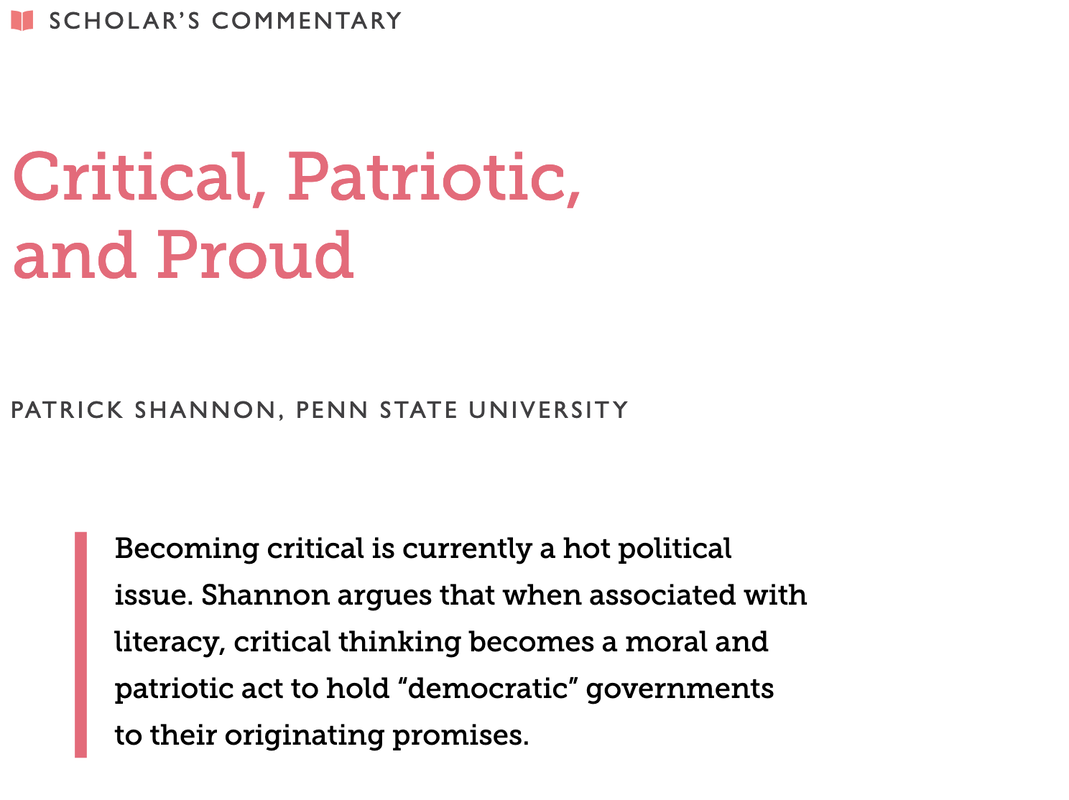
SCHOLAR'S COMMENTARY FROM THE
Spring 2022 Issue
|
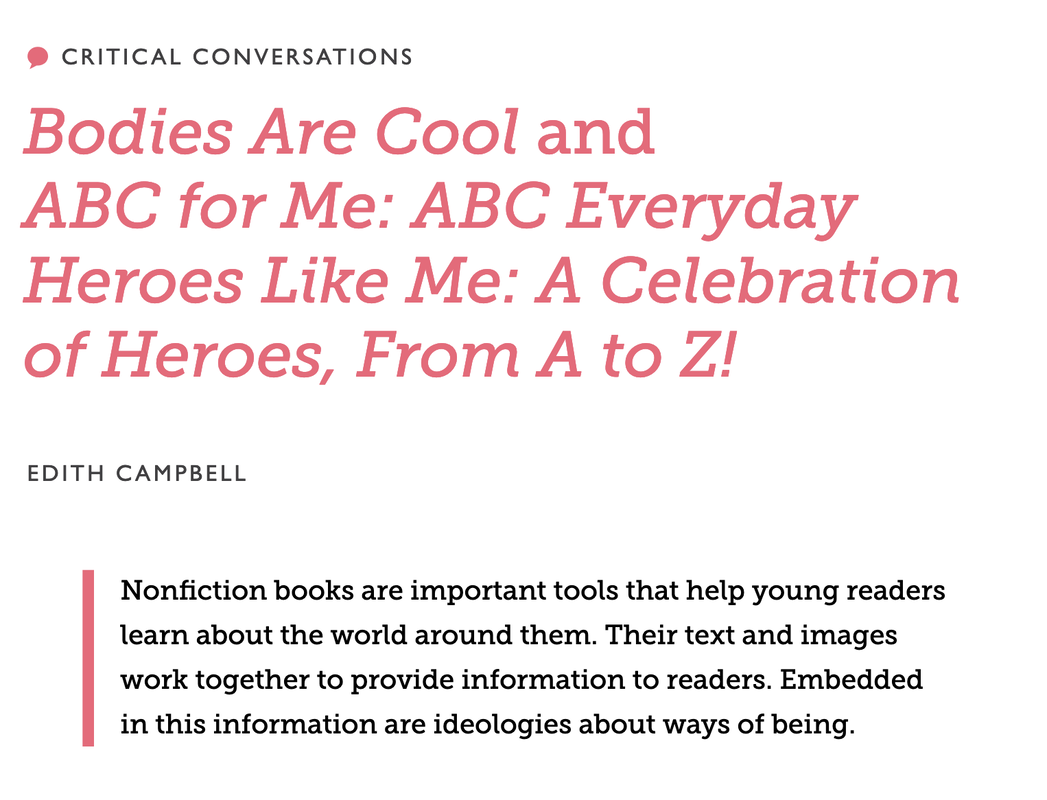
CRITICAL CONVERSATIONS FROM THE
SPRING 2022 Issue
|
SAMPLE ARTICLES Far Apart, Close in Heart: Exploring Representations of Familial Incarceration in Children’s Picturebooks
By RHIANNON M. MATON, BREEANNA DEXTER, NICOLETTE McKEON, EMILY URIAS-VELASQUEZ, & BREANNA WASHINGTON 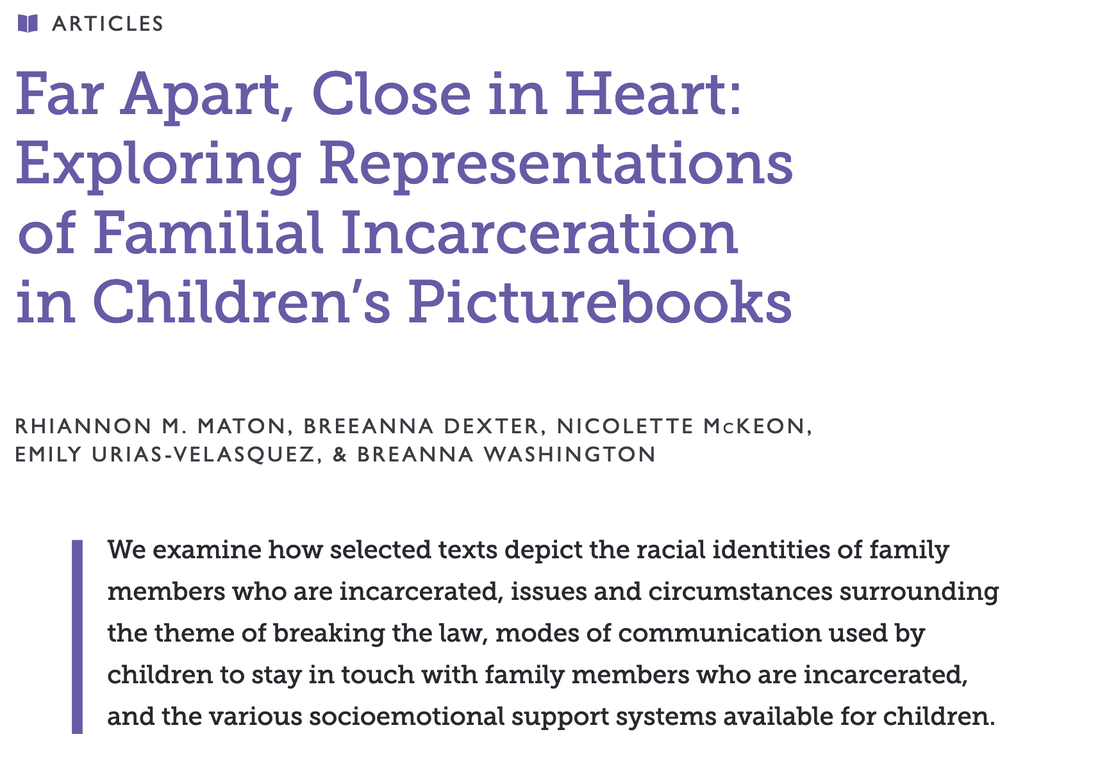
Journal of Children’s Literature, 48(2), pp. 19–32, 2022
Elementary Literacy Teachers Change the Underlying Story Through Transformative Read-Aloud Curricula
By SABA KHAN VLACH 
Journal of Children’s Literature, 48(1), pp. 33-44, 2022
be who you are: Exploring representations of transgender children In Picturebooks
by A. Crawley 
Journal of Children’s Literature, 43(2), pp. 28–41, 2017
|
JCL COLUMNS2017 cla master class: Diverse nonfiction
children's literature in the university classroom by T. Crisp, A. Knezek & R. gardner 
2016 CLA Master class: Diverse children's
literature at the university by L. LianG, L. Parsons & T. Crisp 
2016 cla workshop: Diversity 2.0: Advocating for more than just diverse faces
By M. Koss & D. Johnson 
|